
Page 99 of The Creation of Anne Boleyn takes us right to the heart of Anne’s downfall: The times, to anachronistically poach from Bob Dylan, were a ‘changing. Yes, Anne had failed to produce a son for Henry VIII, and yes, Thomas Cromwell had his own reasons to plot against her. Yes, she had many enemies at court, and yes, there was Jane Seymour waiting in the wings, with the promise of greater obedience than feisty Anne and fresher eggs for the incubation of a royal heir.
What’s Ever since Thelma and Louise clasped hands and took fatal flight into the Grand Canyon, there’s been no shortage in pop culture of fierce women willing to risk it all for their integrity, freedom, or justice. Has anyone noticed, however, how unlucky they are in love?….
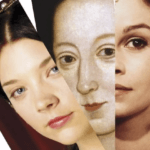
Co-authored by Lucy Churchill. What did Anne Boleyn really look like?
You might think it would be a daunting task to pick out actors to play characters who have been cast, often memorably, many times before. But actually, it’s an opportunity that I have fantasized about. It is well known to Tudor scholars but virtually no one else that the BBC, Hollywood, and Showtime have rarely made choices that remotely resembled—either physically or in their “essence”—the central players in the drama of Henry VIII and ill-fated Anne Boleyn.

Natalie Dormer, the 26 year-old actress who was chosen to play the role of Anne Boleyn, approached her assignment very differently. Natalie has strong opinions about the real Anne, and when she got the role, was excited over the prospect of embodying her as accurately as possible.

Natalie Dormer, the 26 year-old actress who was chosen to play the role of Anne Boleyn, approached her assignment very differently. Natalie has strong opinions about the real Anne, and when she got the role, was excited over the prospect of embodying her as accurately as possible.

Among the authors that I corresponded with was Hilary Mantel, whose sequel to Wolf Hall, entitled Bring Up the Bodies, has just been published. She was not yet finished with the sequel when we corresponded; in fact, was at that point not planning a trilogy, but a long second volume. Her publishers convinced her, however, that her section on the fall of Anne Boleyn constituted a book on their own—hence, the decision to enlarge and publish that section as Bring up the Bodies.
There is a scene in the 1969 film version of Anne of the Thousand Days that has audiences cheering to this day.

I wrote The Secret Diary of Anne Boleyn because I thought she was totally misunderstood, especially about her part in the Reformation. I’m not saying it wouldn’t have happened without Anne Boleyn but it happened when it did in England because of her.

Since my goal is to resurrect the person (as much as humanly possible, so they would be pleased and say, “hey, that’s just the way it was!”) that means I am a stickler for accuracy and don’t have much truck with the idea that ‘history is what you make it’—‘well, who can say what really happened’ etc. I ran into a lot of that with Cleopatra, where people said that as long as there was one iota of ‘doubt’ (usually meaning their own doubt, not experts’ doubts) then the gate was wide open to claiming just about anything. (“Well, how do we know she was a Ptolemy?”) This can reach ridiculous lengths and come to ridiculous conclusions. Then they hide behind, “Well, it’s fiction!”