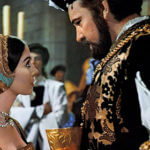
Casting Genevieve Bujold was Hal Wallis’s smartest decision in making Anne of the Thousand Days, and he did so without benefit of a screen-test or even a personal interview, simply on the basis of viewing her in the French-Canadian film Isabel (1968, and directed by then-husband Paul Almond). "The minute she appeared on the screen, Wallis wrote in his autobiography Starmaker, “I was riveted. I saw a tiny, seeming fragile woman made of steel—willful, passionate, intense. She was exactly the actress I wanted to play Anne.”

Casting Genevieve Bujold was Hal Wallis’s smartest decision in making Anne of the Thousand Days, and he did so without benefit of a screen-test or even a personal interview, simply on the basis of viewing her in the French-Canadian film Isabel (1968, and directed by then-husband Paul Almond).
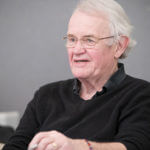
In the summer of 2010, just a few days after Howard Brenton’s play Anne Boleyn opened to rave reviews at Shakespeare’s Globe Theatre, Brenton met with me in the coffee shop of the theatre to talk about the play, what inspired him to write it, his conception of Anne, Henry, and Cromwell, and the difference between polemic and art.
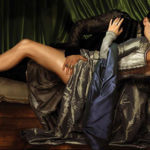
All the courts of Europe were run by people in their teens and twenties…that’s why they were so crazy. We have this image now that the court is always middle aged, but it wasn’t true. You know, Henry was 18 when he became King, and I thought it was ridiculous that people were telling me he was really rather prudish and there was no sex because there was no heating in the palaces…

Michael Hirst, on the “psychological crisis” that led to Anne’s execution,and how it altered Henry
atherine Raissiguier and Susan Bordo met when Raissiguier invited Bordo to give a series of lectures at the Center for Women's Studies at the University of Cincinnati in the late 1990s. While open to the public, the lectures were primarily geared for MA students in women's studies and were designed to function as an intensive graduate seminar.
In a culture in which organ transplants, life-extension machinery, microsurgery, and artificial organs have entered everyday medicine, we seem on the verge of practical realization of the seventeenth-century imagination of body as machine. But if we have technically and technologically realized that conception, it can also be argued that metaphysically we have deconstructed it.
“So you’re not Cassie’s real mother, then?” The woman’s face was innocent and open with curiosity. My then-four-year-old daughter was standing beside us, impatiently waiting for the story-telling hour for toddlers to begin. I automatically shot a glance at her, wondering if she had heard. But her attention was on the Thomas the Tank Engine table, around which several little boys were clustered, arguing over who would get to be Thomas. The woman asking the question was the manager of the toddler reading program at our neighborhood “progressive” bookstore, the person parents go to for instruction and guidance when they are picking out books for their children.
In the first year and a half of Cassie’s life, her hair was basically not an issue because she didn’t have much. Then one day she came home from day care with a dozen tiny braids marking a complex and delicate pattern on her tiny head. I was, first of all, mystified. I had no idea she had enough hair to do anything like this. Where had all that hair come from? How had her teacher gathered it up like that? And how had she gotten her to sit still long enough to do it?